Atomic Aquatics

Atomic Aquatics ST1 (Sealed, Yoke)

A solid 316 stainless steel first stage paired with T3-grade titanium second-stage internals, Atomic's middle ground between the B2 and the full titanium-billet T3.

Environmentally sealed, cold-water rated

Sealed first stage keeps water and ice crystals out of the internal mechanism, the standard for diving below 50°F/10°C.
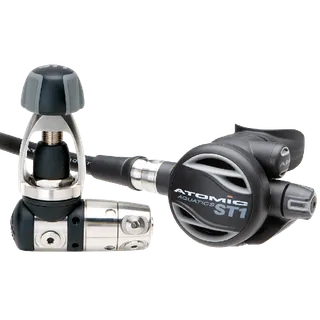
Atomic Aquatics ST1 (Sealed, Yoke)
$1649.95
Released2007
First stagepiston
BalancedYes
Environmentally sealedYes
Cold-water ratedYes
Connectionyoke
Max pressure
HP / LP ports2 / 5
Adjustable 2nd stageYes
Weight1043g
Nitrox-ready (EAN40)Yes
Octo includedNo

"HP / LP ports" is the number of high-pressure and low-pressure ports on the first stage, which caps how many accessories (transmitter, SPG, inflator, second second-stage) you can run at once.

Pros
  • Machined from solid 316 stainless steel rather than plated brass, twice the strength with corrosion resistance close to titanium
  • Shares the same titanium second-stage components and AFC as the flagship T3, at well under half the price
  • Freeze-protected and factory-sealed as standard, with a 2-year/300-dive service interval
Cons
  • Heavier than the T3 at 2.3 lb versus under 1.8 lb, stainless steel doesn't shave weight the way titanium billet does
  • Divers who've owned multiple Atomic regs note the ST1, B2, T2, and Z2 all breathe identically since the internals are shared, so the ST1 premium buys durability and looks more than performance
  • Also sold in DIN and unsealed configurations, confirm the listing matches this sealed yoke spec
Diver community sentiment
Mostly positive

Divers on Scubaboard who've owned the ST1 describe it as flawless and easy-breathing, with one longtime owner saying it extended their bottom time and another reporting close to a year of trouble-free use. Long-running Atomic threads comparing the M1/ST1/B2/Z2 lineup consistently note that because the second-stage internals are shared across the range, breathing performance is effectively identical regardless of which first-stage material you pick, so ST1 buyers are mostly paying for the stainless-steel body's corrosion resistance and lower long-term maintenance rather than a breathing upgrade. No recurring failure pattern turned up in the threads reviewed.

Summarized from public forum discussion (Scubaboard, Reddit, and similar), not a survey we ran ourselves. See the linked threads for the original conversations.

The ST1 sits between the B2 and T3 in Atomic’s lineup, trading the B2’s chrome-plated brass for a solid 316 stainless steel first stage while carrying over the same titanium second-stage components found in the T3. It’s aimed at divers who want more corrosion resistance and a longer service life than the B2 offers without paying T3 money for titanium’s weight savings, which stainless steel doesn’t provide.