Oceanic

Oceanic Geo Air

A watch-style computer with Oceanic's Dual Algorithm and optional air integration.

Open BLE sync (libdivecomputer)

Syncs wirelessly with third-party apps (Subsurface, Currents, etc.), not just the manufacturer app.
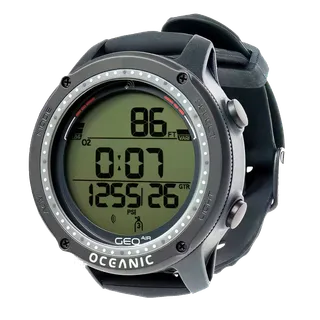
Oceanic Geo Air
$500
Released
Max depth rating100m
AlgorithmOceanic Dual Algorithm (DSAT/Pelagic Z+)
Air integrationwireless
Wirelessbluetooth
DisplayLarge LCD with backlight
Batteryuser-replaceable
Digital compassNo
Gas typesair, nitrox
Gas switches3
CCR capableNo

"Gas switches" is how many different mixes this computer can be programmed to switch between mid-dive, mostly relevant for technical/staged-decompression diving. It doesn't tell you which gas types (air, nitrox, trimix) are supported. See Gas types and the product description above for that.

Pros
  • User-replaceable CR2430 battery rated for around 300 dive hours
  • Bluetooth sync to Oceanic's companion app
  • Optional wireless pressure transmitter for air integration
Cons
  • Wireless transmitter is a separate purchase and adds a couple hundred dollars
  • No digital compass
  • Monochrome display only
Diver community sentiment
Mixed opinions

Scubaboard participants generally view the Geo Air as a reasonably priced, feature-competitive entry into air-integrated dive computers, especially compared to pricier options like the Shearwater Peregrine, and appreciate its Bluetooth connectivity and firmware upgradability. Recurring complaints center on the monochrome display being hard to read, particularly in low light, the absence of a built-in compass, and skepticism that it's practical as an everyday watch given its size. In head-to-head comparisons with the Shearwater Peregrine, divers consistently favor the Peregrine's screen readability and interface, while acknowledging the Geo Air's clear price advantage.

Summarized from public forum discussion (Scubaboard, Reddit, and similar), not a survey we ran ourselves. See the linked threads for the original conversations.

The Geo Air is Oceanic’s watch-style recreational computer, built around the company’s dual-algorithm approach (a blend of DSAT and Pelagic Z+ decompression models) with an optional wireless transmitter for tank pressure.