SeaLife

SeaLife Micro 3.0

Permanently sealed underwater camera individually pressure-tested to 60m, with no doors, ports, or O-rings to ever maintain or flood.

Dive-ready without housing

Rated waterproof to 60m on its own. No separate housing required for recreational depths within that rating.
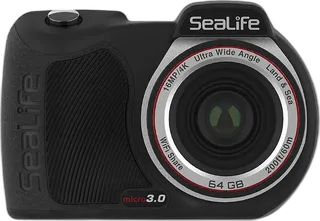
SeaLife Micro 3.0
$599
Released2020
Typeunderwater compact
Resolution16 MP
Max video4K30
Sensor size1/2.3"
Native waterproof60m
StabilizationNo
RAW supportNo
Housing depth rating
Housing material
Weight306g
Pros
  • Fully sealed unibody design has no watertight doors, battery hatch, or O-rings at all, removing the single most common cause of flooded dive cameras (a bad seal or forgotten latch)
  • 60m native depth rating, individually pressure-tested per unit, matches or beats what most cameras need an accessory housing to reach
  • Simple fixed control layout is built for gloved-hand operation, rather than adapting a land camera's menus for underwater use
Cons
  • No RAW support and no image stabilization; footage and photos rely entirely on in-camera JPEG/video processing
  • 16MP resolution and no optical zoom make it a point-and-shoot rather than a camera for serious post-dive editing or cropping
  • Sealed design that can't be opened means no user-serviceable seals, but also no field fix if the internal battery ever needs replacement outside SeaLife's service process
Diver community sentiment
Mixed opinions

On Scubaboard, the Micro 3.0's permanently sealed body and depth rating draw genuine interest, but experienced underwater photographers are blunt that SeaLife cameras "don't capture the best images or video" compared to a compact like the Olympus/OM System TG series. One frequent poster argued against buying it over a TG-6 at all, citing the lack of normal camera controls outside SeaLife's automatic "scenes," no shutter speed or aperture control, no strobe connections, and limited macro reach, calling it "basically a kid camera." The reduction in field of view from 130 degrees on the Micro 2.0 to 100 degrees on the 3.0 was also flagged as a step back for wide-angle action use. The consensus is mixed: valued for its no-maintenance sealed design and ease of use, but seen as a simplified point-and-shoot rather than a serious imaging tool by more advanced divers.

Summarized from public forum discussion (Scubaboard, Reddit, and similar), not a survey we ran ourselves. See the linked threads for the original conversations.

The SeaLife Micro 3.0 takes a different approach to “dive-ready” than every other camera here: instead of a removable battery door and O-ring seals rated to some depth, it’s a permanently sealed unibody, individually pressure-tested to 60m per unit, with no doors or ports that could ever be left open or damaged. That tradeoff removes the most common way dive cameras flood, a bad or forgotten seal, at the cost of being unable to swap the battery or SD card in the field the way a normal camera can. It shoots 16MP photos and 4K video with no RAW support or stabilization, positioning it as a simple, hard-to-break point-and-shoot rather than a full-featured imaging tool.