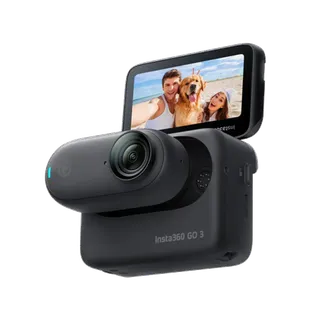
The Insta360 GO 3S is the latest in Insta360’s tiny clip-on camera line: a 39g magnetic pod paired with a separate flip-screen Action Pod that acts as a viewfinder, grip, and charging dock. The camera alone is rated to 10m, which covers snorkeling and shallow reef work; reaching real scuba depths (advertised to 60m) requires buying the Dive Case accessory separately, an added cost this Standard Edition bundle doesn’t include. It shoots 4K30 with 6-axis FlowState stabilization and supports RAW photo export, and its size makes it easy to mount in places a GoPro-class camera can’t fit. As a newer release, there isn’t yet an established body of diving-specific community discussion on forums like Scubaboard to draw on, so treat it as a promising secondary/POV camera rather than a proven primary dive-video rig until more divers have put it through its paces.
Insta360
Insta360 GO 3S
A 39g clip-on action cam with a flip-screen Action Pod controller; native waterproofing is only 10m, and going deeper needs a separate Dive Case accessory.
Dive-ready without housing
Rated waterproof to 10m on its own. No separate housing required for recreational depths within that rating.
| Released | 2024 |
| Type | action cam |
| Resolution | 12 MP |
| Max video | 4K30 |
| Sensor size | 1/2.3" |
| Native waterproof | 10m |
| Stabilization | Yes |
| RAW support | Yes |
| Housing depth rating | — |
| Housing material | — |
| Weight | 39g |